

There’s something magical about opening a book that once belonged to another generation. There is a sense of connection to the children who turned its pages long before you. Whether it’s the faint scent of paper and ink, the faded illustrations, or the delicate wear along the spine, time leaves its mark in ways that go far beyond aesthetics.
For collectors and enthusiasts, old children’s books carry a unique allure: they are windows into cultural history, artistic expression, and the evolving nature of storytelling itself. Yet as these stories age, so too does their value, shaped not only by condition or rarity but by the emotional and historical weight they hold. Understanding how age transforms these beloved storybooks offers insight into why some titles grow more desirable while others fade quietly into obscurity.
The Passage of Time as a Storyteller
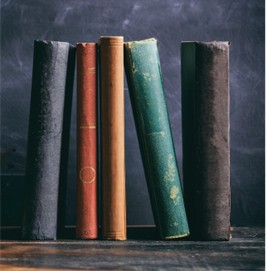
Every book tells two stories: the one printed on its pages and the one it accumulates over time. The physical aging of a storybook, for example its yellowing paper, softened bindings, and worn covers, becomes part of its identity. To a collector, these signs aren’t flaws; they are evidence of a life well-lived.
Over the decades, materials used in printing and binding evolve, leaving clues about the era in which the book was produced. Early 20th-century storybooks, for instance, were often printed on acidic paper that has since become brittle and discolored. Earlier works from the 19th century may have been hand-sewn or decorated with elaborate embossed covers. These details help appraisers and collectors date the item and assess its authenticity.
But the impact of time extends beyond the physical. Books mirror the values, morals, and language of their period. A tale that once served as a moral guide for Victorian children now reads as a fascinating glimpse into social expectations of the past. This historical context adds depth and scholarly value that extends far beyond monetary worth.
Why Age Alone Doesn’t Determine Value
It’s a common misconception that the older a book is, the more valuable it becomes. Age contributes to rarity, but it’s just one piece of a larger puzzle. Collectors and experts evaluate storybooks based on a combination of scarcity, condition, edition, cultural significance, and provenance.
A 1920 edition of a popular fairy tale might still be widely available, while a lesser-known title from the same period, printed in small numbers and featuring early artwork by a notable illustrator, may be worth considerably more. The market rewards uniqueness, not simply age.
Condition also plays a decisive role. A century-old storybook in pristine condition, complete with dust jacket and original binding, can command far higher prices than a more famous title that’s been heavily used. Ironically, the very purpose of children’s books, to be read, handled, and loved, makes finding them in excellent condition especially challenging, thereby increasing their rarity.
The Art That Ages Gracefully
Illustrations are often what make classic storybooks timeless. Before photography dominated publishing, illustrators were the visual storytellers, shaping how readers imagined fantastical worlds and beloved characters. Artists like Arthur Rackham, Kate Greenaway, and Edmund Dulac didn’t just decorate stories, they defined their visual legacy.
As illustration styles evolved, so too did printing techniques. Early color lithography gave way to hand-tinted pages, then to more modern offset printing. Books featuring original hand-colored images or first-edition prints of iconic illustrations are particularly prized.
The passage of time enhances the artistic value of these images. Collectors and art historians often see these books as miniature galleries, preserving the aesthetic movements of their day, from Art Nouveau flourishes to mid-century modern simplicity. The older and rarer the artistic style, the more it resonates with those seeking pieces of visual and cultural heritage.
Cultural Context and Shifting Perception
The meaning of a story can also change dramatically with time. What was once commonplace or instructive may later be viewed as outdated or alternatively, as a cultural artifact that captures a moment in social evolution.
For instance, early moral tales emphasized obedience and virtue, while mid-century titles celebrated imagination and individuality. Today, those older moralistic works are valued not just as stories, but as sociological snapshots. They reveal what past generations believed childhood should look like and how those ideals have transformed.
At the same time, societal awareness plays a role in shaping a book’s modern reception. Some titles have faced reevaluation due to dated or problematic representations. While this can diminish market demand for some, it often sparks academic interest in others, as they become study pieces for understanding cultural history.
The older a storybook becomes, the more layered its meaning and thus, its appeal, can grow.
Stories Behind the Story
Provenance, the record of a book’s ownership and history, adds an emotional and historical dimension to its value. A worn inscription, a name written in faded ink, or even a note from a parent gifting the book to a child decades ago transforms the object into a personal artifact.
Collectors often treasure books with documented origins, particularly those tied to notable individuals, schools, or events. A fairy tale once owned by a famous author or a copy presented to a child during wartime carries a resonance that transcends the printed story.
Age amplifies this effect. As generations pass, the chain of ownership becomes a living history of how the book survived, who cared for it, and why it mattered enough to be kept. That narrative of endurance contributes to both sentimental and market value.
The Market’s Changing Appetite
Like all collectible fields, the market for vintage storybooks evolves with time. Certain eras and themes rise in popularity based on nostalgia cycles and cultural rediscovery.
Collectors of the 1980s were fascinated by 19th-century fairy tales, while modern buyers may gravitate toward mid-century picture books or early pop-up editions. Age plays a dual role here – it creates scarcity while also driving emotional connection. The books that children of one generation cherished often become the collectibles of their adulthood.
Digital marketplaces have also reshaped perceptions of rarity. A book once thought impossible to find might suddenly appear online, leveling prices. Conversely, pristine copies of once-common titles have become more valuable, as collectors recognize how few have survived in excellent condition.
The Fragile Balance Between Preservation and Authenticity
One of the ongoing debates in the world of literary preservation is whether to restore or maintain a book’s natural wear. Professional restorers can rebind covers, mend torn pages, and stabilize aging materials, but purists often argue that such interventions erase the story of the book’s life.
A perfectly restored volume may appear newer but lose the authenticity of its journey. A gently aged copy, with careful storage and original binding intact, retains the tactile evidence of history, something that can’t be replicated.
Collectors are increasingly drawn to well-preserved but unrestored pieces, valuing authenticity over perfection. The aging process, when stabilized and cared for, becomes part of the aesthetic charm.
Caring for Aging Storybooks
As beloved storybooks age, their preservation becomes an act of stewardship. To protect both sentimental and financial value, collectors should consider a few key practices:
Control the environment: Keep books in stable conditions with moderate temperature and humidity, away from direct sunlight and dampness.
Handle with care: Always use clean, dry hands and avoid pulling on the spine when removing books from shelves.
Use archival materials: Acid-free sleeves, boxes, and papers can prevent further deterioration.
Avoid quick fixes: Tape, glue, or home repairs can cause long-term damage. Professional conservators are best suited for delicate restorations.
Document provenance: Keep records of purchases, appraisals, and any restoration work for historical continuity.
The goal isn’t to halt aging but to ensure that each book continues its story, intact and appreciated, for generations to come.
Time as the Final Curator
In the end, time itself becomes the greatest curator of all. It chooses which stories endure, which fade, and which gain new life in the eyes of future readers. The age of a beloved storybook doesn’t merely measure years; it reflects how deeply it has intertwined with human memory, art, and imagination.
Aging adds patina, history, and gravity to objects that were once just playthings or bedtime companions. It transforms the ordinary into the exceptional. Each crease, stain, or softened edge marks continuity, a testament to the power of stories to outlast the generations who first held them.
And so, the next time you come across a tattered children’s classic on a shelf or in a forgotten box, look closer. What you hold isn’t simply an old book, it’s the echo of countless imaginations, preserved by time itself.
